
What this service involves
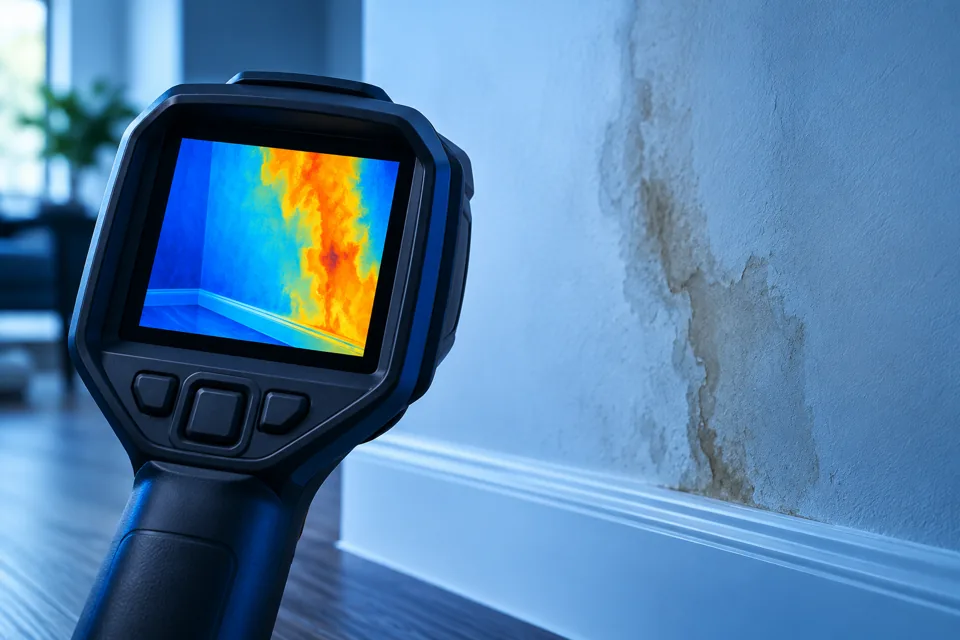
A striking thermal image needs careful interpretation. Temperature differences can arise from air movement, insulation, sunlight, heating or moisture, so the image is evidence to consider rather than a diagnosis by itself. Explain when a stain appears, whether nearby plumbing is used at that time and any recent weather or heating changes. Those observations can help the provider choose areas to inspect and confirm.
Through our High Point leak-investigation services, you can ask about an independent provider’s suitability for your property. Confirm the address, access and inspection scope before booking.
Signs worth investigating
- Dampness appears intermittently near concealed plumbing.
- A ceiling or wall stain has no obvious visible source.
- A suspected hot-water leak creates an unusual temperature pattern.
- The spread of a moisture problem needs further investigation.
What to expect from an assessment
Review the surroundings
The provider considers the symptom history, accessible plumbing and environmental conditions. They decide whether temperature imaging is likely to add useful information and whether other checks should come first.
Inspect surface patterns
The camera records temperature variation across accessible surfaces. The provider interprets those patterns in context rather than assuming every unusual color represents moisture or a hidden pipe leak.
Verify the suspected cause
Moisture readings, plumbing tests or other appropriate observations may be needed to support a conclusion. Ask which findings are confirmed, what the camera alone cannot establish and whether further access is proposed.
Cost and scope: what to ask
Ask whether the quoted visit includes only thermal images or a broader leak and moisture investigation. The number of rooms, access, reporting requirements and follow-up testing affect scope and cost. A visual image without interpretation may not answer your main question. Clarify whether written findings, moisture checks and recommendations are included, and whether additional visits require separate approval. Detection, pipe repair, drying and reinstatement are different services; obtain a clear explanation of what the provider will actually deliver.
What this inspection can—and cannot—tell you
Infrared cameras show surface-temperature patterns, not an X-ray view of pipes or moisture behind finishes. Environmental conditions and reflective surfaces can complicate interpretation. A leak may not create a detectable pattern during the visit, and a visible pattern may have another cause. Thermal imaging should therefore support appropriate investigation rather than substitute for confirmation. Claims that a camera alone identifies every concealed leak are not a reasonable basis for choosing a provider.
Related checks that may help
Depending on the findings, the next discussion may involve residential leak detection or slab leak detection. Ask why any additional test is needed and whether it changes the quoted scope.
For local access considerations, read about Emerywood and Downtown High Point, or browse our High Point service areas. Coverage is confirmed by address.
Frequently asked questions
Can thermal imaging see through a wall?
No. The camera measures surface-temperature patterns. A concealed problem may influence the surface, but further checks are needed to understand what caused the pattern.
Will it detect a cold-water leak?
It may help in some circumstances, but results depend on temperature differences and site conditions. The provider should assess suitability and explain other methods if thermal imaging is not informative.
Can it prove there is mold?
No. A thermal image does not identify mold or establish its type. Tell the provider about visible growth or persistent dampness so they can explain the appropriate scope and any specialist assessment needed.
Should I turn the heating off before the visit?
Ask the assigned provider for preparation instructions. The desired conditions depend on what is being investigated. Do not change systems or run water solely to create a thermal pattern without their guidance.
Before the visit
Record when the issue started and any recent plumbing work. If safe, photograph visible symptoms and gather recent usage information. Tell the provider about occupied rooms, locked gates and permission needed for access. Avoid opening walls or digging merely to look for the source.
Editorial review: November 2, 2026 · APX Leak Locator. General guidance; an on-site assessment is needed for diagnosis.